Nous traitons votre demande.
S'il vous plaît, ne fermez pas et ne rafraîchissez pas la page.
Accueil Cathédrale Saint-Patrick

St. Patrick’s Cathedral, Dublin: Tickets and Info

Ce site propose des billets officiels pour ce lieu / musée. Veuillez toutefois noter qu’il ne s’agit pas du site officiel du lieu / musée.
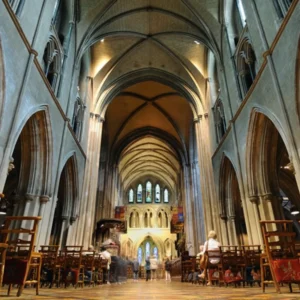
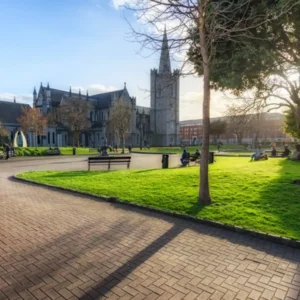
La cathédrale Saint-Patrick : un voyage dans le temps !

Points forts

Step inside Ireland’s tallest church dedicated to its patron saint.

Découvrez des expositions interactives sur écran tactile et une visite audio autoguidée.

See Jonathan Swift’s burial place and admire exquisite stained glass windows.

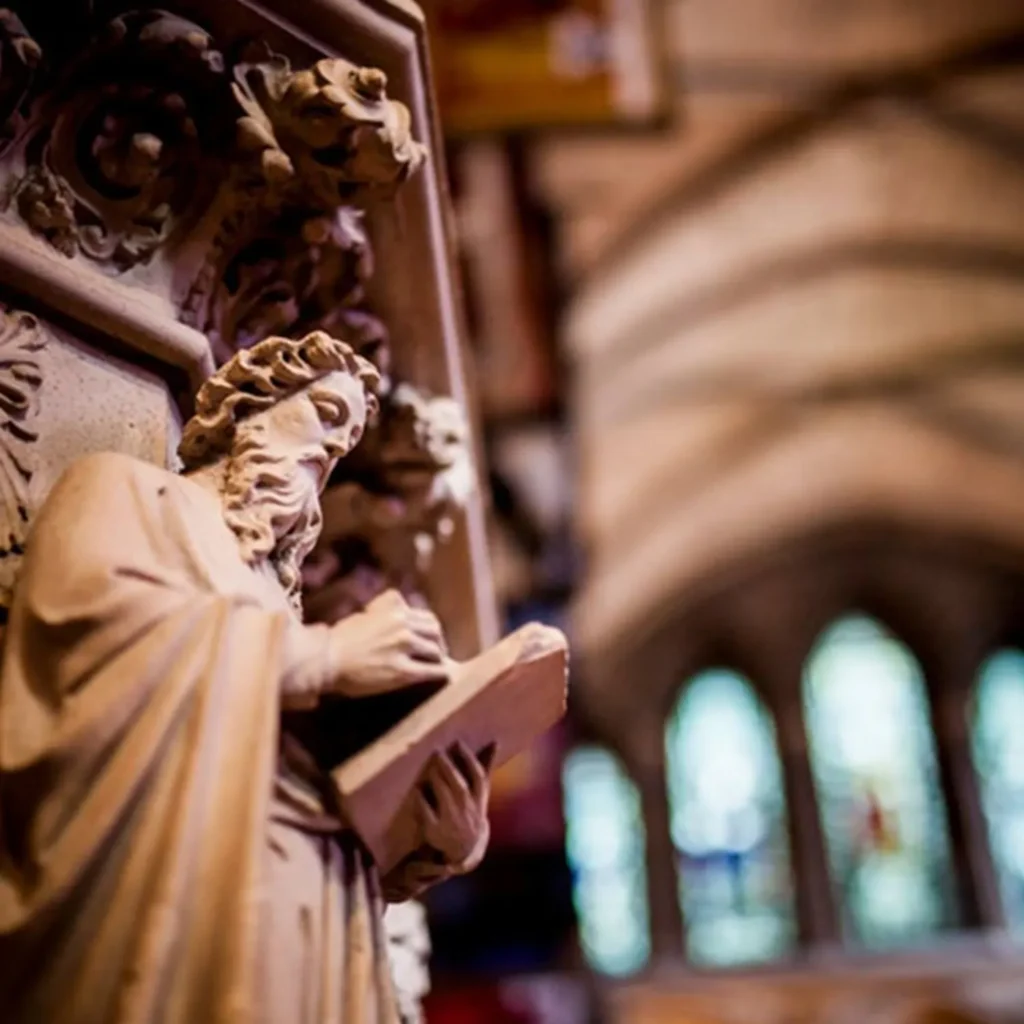
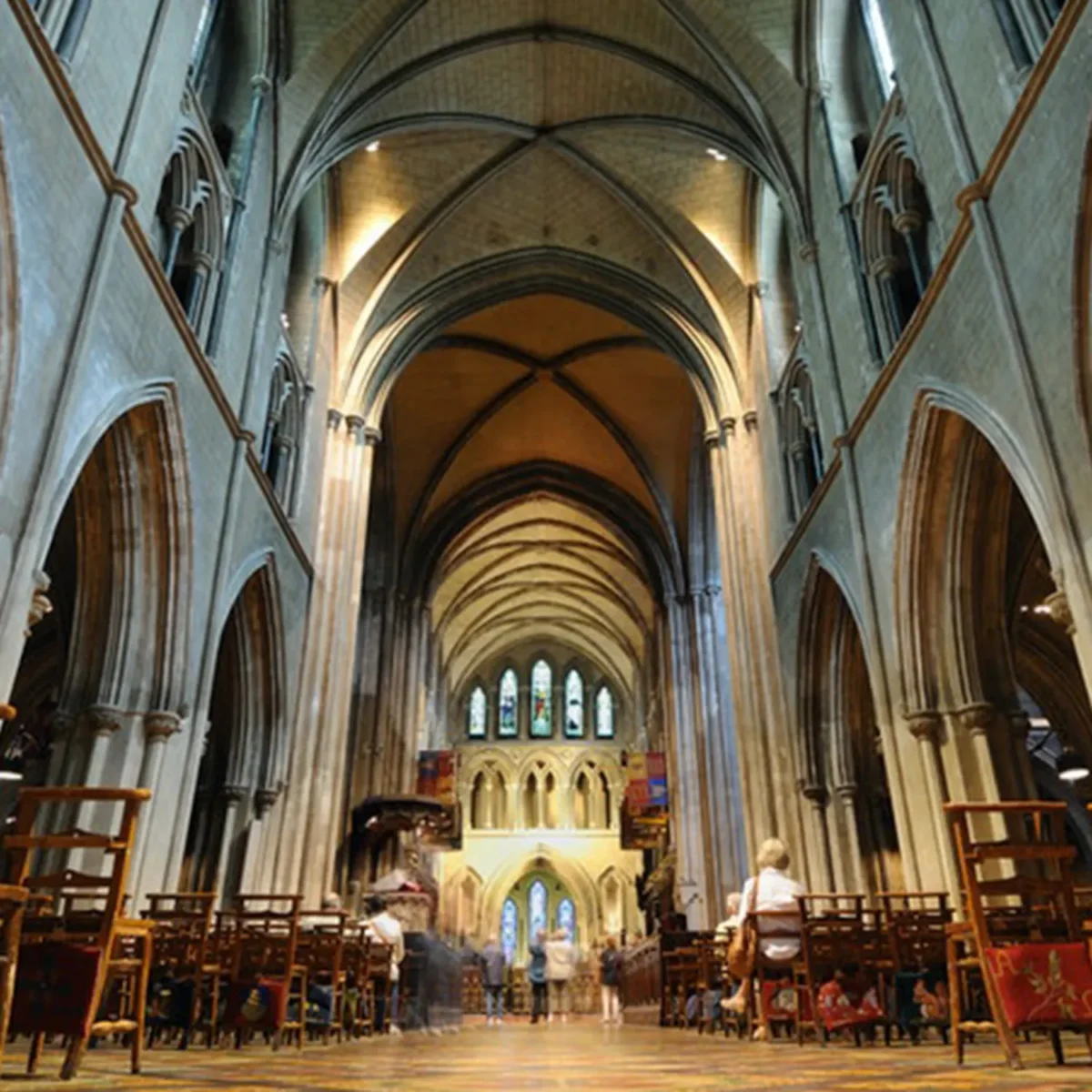
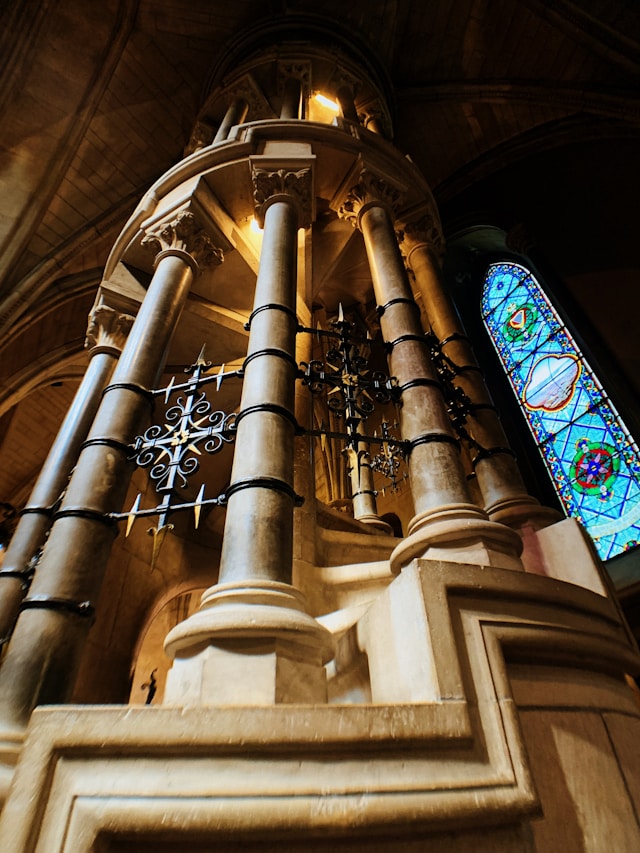
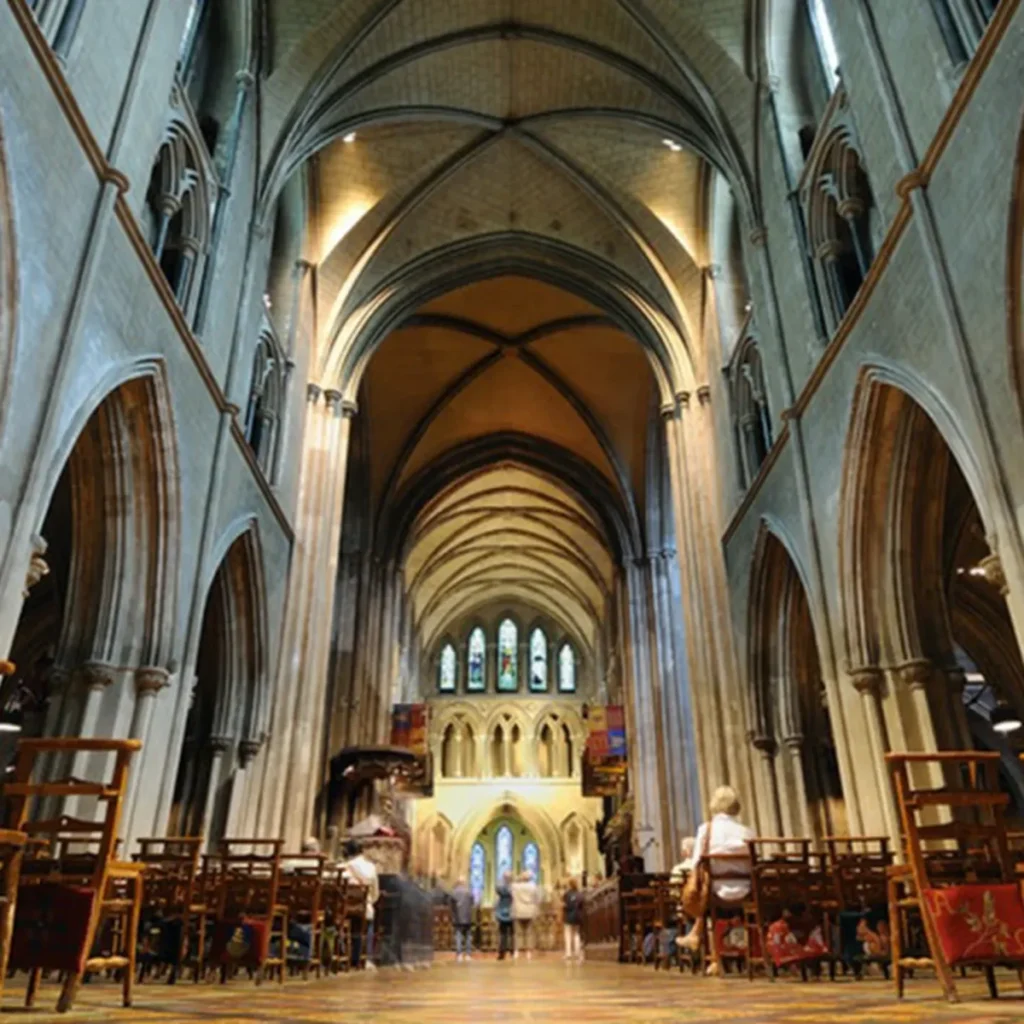
Venez découvrir l’impressionnante architecture gothique et les magnifiques sols en mosaïque.

Enjoy access to the cathedral’s peaceful grounds and interior spaces.
Good to Know Before Visiting St. Patrick's Cathedral, Dublin

Tickets should be booked online in advance to guarantee your preferred entry time slot and avoid waiting in long lines at the ticket office.
St Patrick’s Cathedral is an active place of worship, so opening hours may change on short notice due to special religious services or funeral ceremonies.
Visitors should dress respectfully when inside the cathedral, avoiding overly casual or revealing clothing out of courtesy for the active parish.
Small backpacks and handbags are permitted inside, but large luggage and oversized travel bags cannot be brought into the cathedral or stored on-site.
Photography for personal use is permitted inside the cathedral, provided flash, tripods, and commercial filming equipment are not used.
Eating, drinking, and chewing gum are strictly prohibited inside the main cathedral building to help protect the historic interior.
Attending the daily Choral Evensong service is free of charge, though sightseeing during active worship services is not permitted.
The cathedral is fully step-free, with permanent ramp access at the main entrance and wide aisles inside for wheelchair users and strollers.
Mobile phones must be set to silent mode upon entering the cathedral to maintain a quiet atmosphere for worshippers and fellow visitors.
Free audio tour guides can be downloaded to your personal smartphone, so bringing your own headphones is strongly recommended.

Informations essentielles pour les visiteurs

St Patrick’s Cathedral is an active place of worship as well as a popular historic site, so opening hours can vary depending on religious services and special events.

Standard Visiting Hours

Monday to Friday: 9:30 AM – 5:00 PM

Saturday: 9:00 AM – 5:30 PM

Sunday: 9:00 AM – 10:30 AM, 1:00 PM – 2:30 PM, and 4:30 PM – 5:30 PM

Note: Last admission is always 30 minutes before closing time. Opening times on Sundays are split to accommodate regular morning and afternoon services.

Best Time of Day to Visit

For a quieter experience: Arrive early in the morning right at opening, or during the early afternoon on weekdays. Group tours and crowds are generally smaller at these times.

For music lovers: Visit in the late afternoon to experience Choral Evensong, which takes place daily during term time. The service is open to the public and offers a chance to hear the cathedral's world-famous choir.

Durée recommandée de la visite

Most visitors spend between 45 and 60 minutes exploring the interior, self-guided displays, and historical monuments. Allow an extra 15 to 30 minutes if you plan to walk through St Patrick’s Park adjacent to the cathedral.

About St. Patrick's Cathedral, Dublin
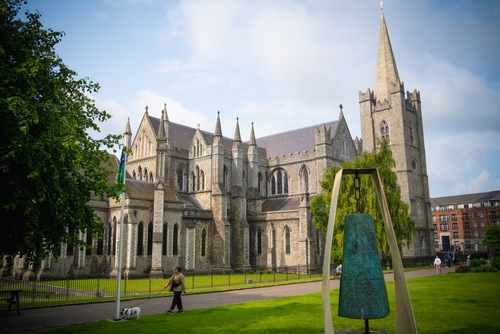
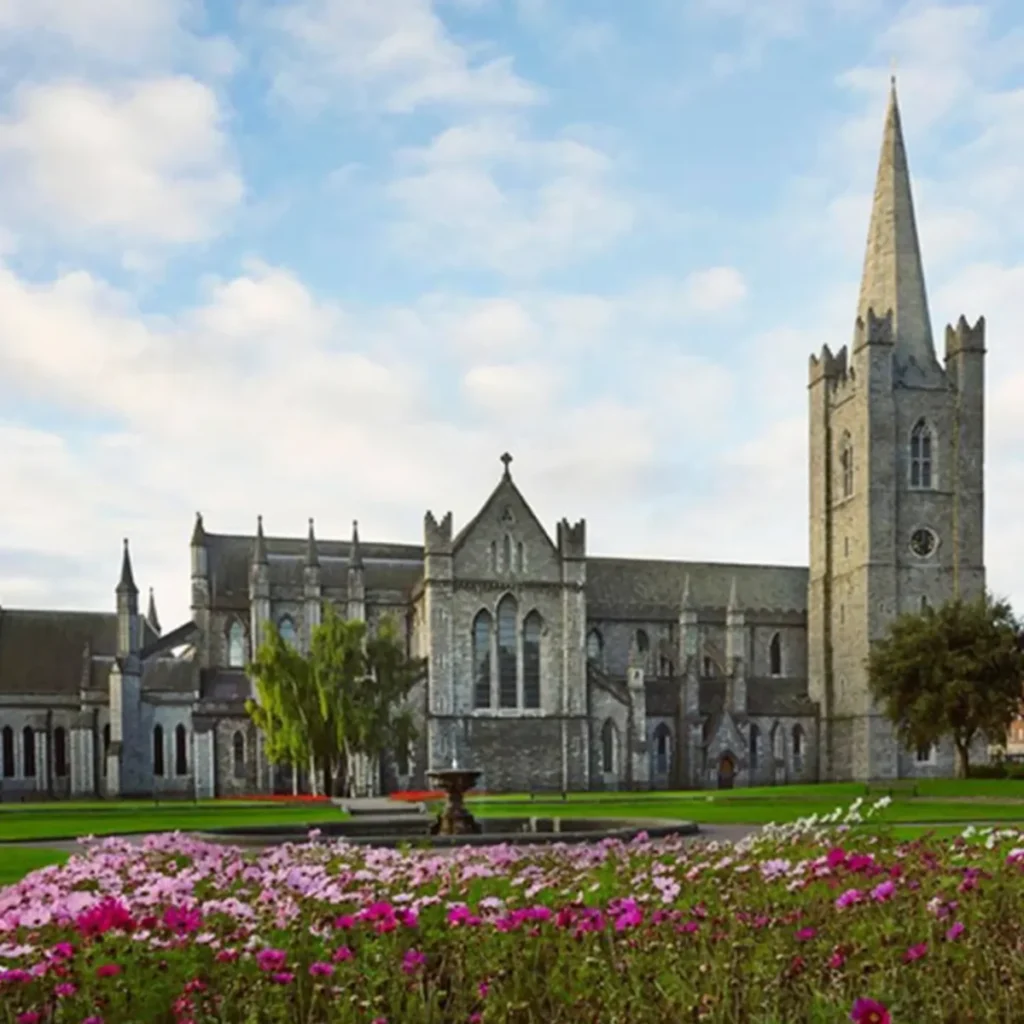
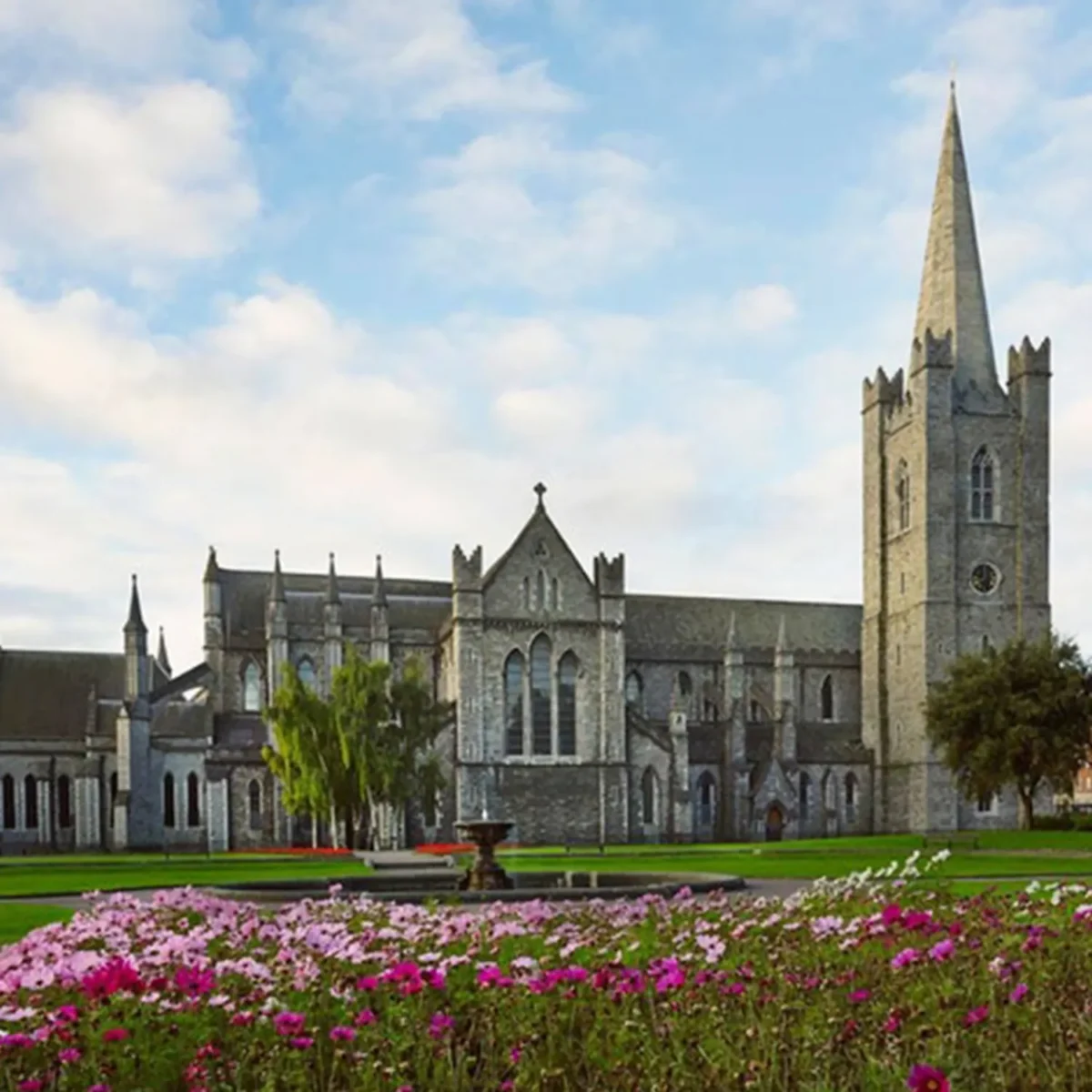
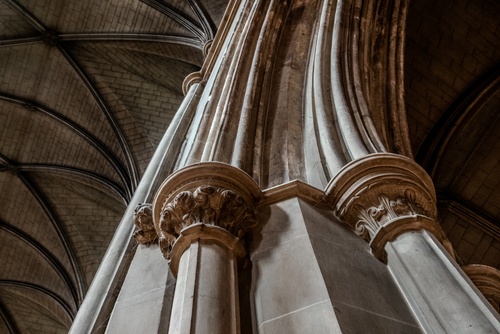
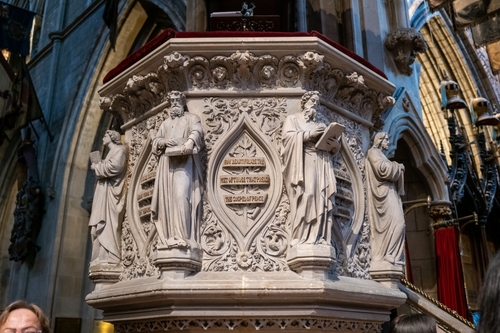
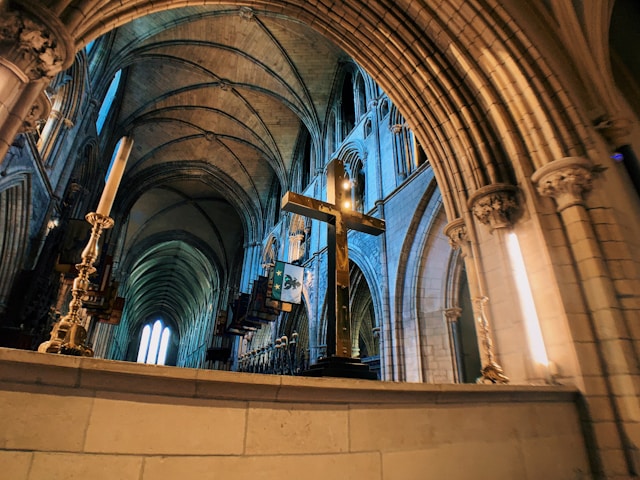
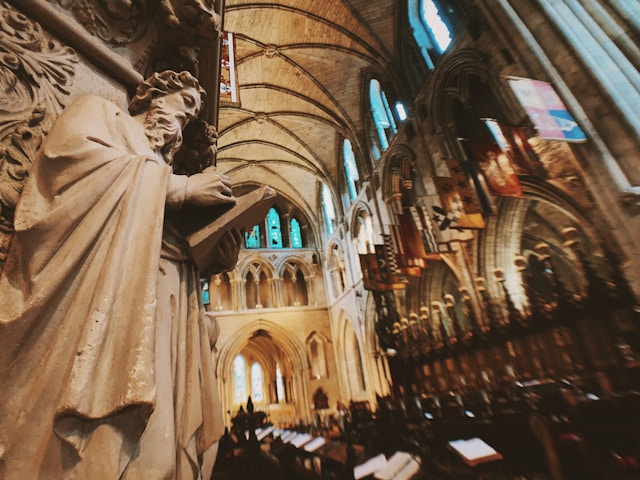
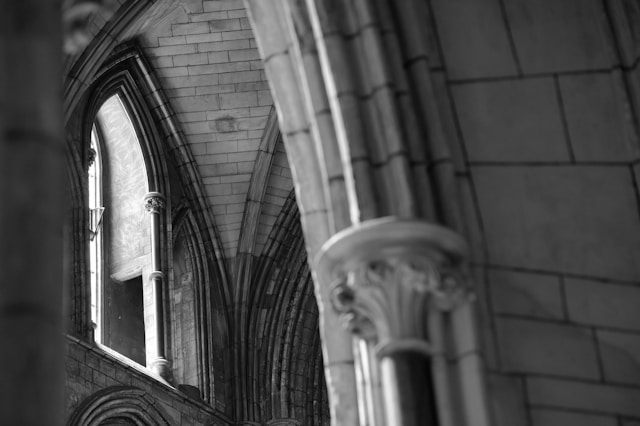
Founded in 1191 on the ancient site of a 5th-century holy well, St Patrick’s Cathedral has stood at the heart of Irish history and culture for over eight centuries. As the National Cathedral of the Church of Ireland, this magnificent Early English Gothic structure is renowned for its architectural beauty, featuring soaring vaulted ceilings, vibrant stained glass windows, and an extensive collection of historic monuments. Over the centuries, the cathedral has survived fires, structural decay, and political upheavals, remaining an active house of prayer and an enduring symbol of Dublin’s resilient heritage.

Beyond its striking architecture, St Patrick’s Cathedral is deeply connected to some of Ireland's most famous historic figures and traditions. It served as the parish home of Jonathan Swift, author of Gulliver’s Travels, who held the post of Dean from 1713 to 1745 and whose grave and personal artifacts remain preserved within the nave. The cathedral is also famous for its contribution to sacred music, maintaining the only remaining cathedral choir school in Ireland, founded in 1432. Today, visitors from around the world gather to admire the historic Door of Reconciliation, experience the incredible acoustics during daily service, and explore the peaceful surrounding grounds in the heart of Dublin's historic Liberties district.

Total Area Covered: Approximately 1.5 acres (cathedral grounds and St Patrick’s Park)
Capacity: 1,500 visitors and worshippers
Year Founded: 1191
Construction Completed: 1270

Why Visit St. Patrick's Cathedral, Dublin?

Ireland’s Largest Church

Built between 1191 and 1270, St Patrick’s Cathedral stands as the largest church in Ireland and one of the nation's most iconic historical sites. Stepping inside offers a rare chance to experience over 800 years of Irish heritage preserved within magnificent Gothic architecture.

The Final Resting Place of Jonathan Swift

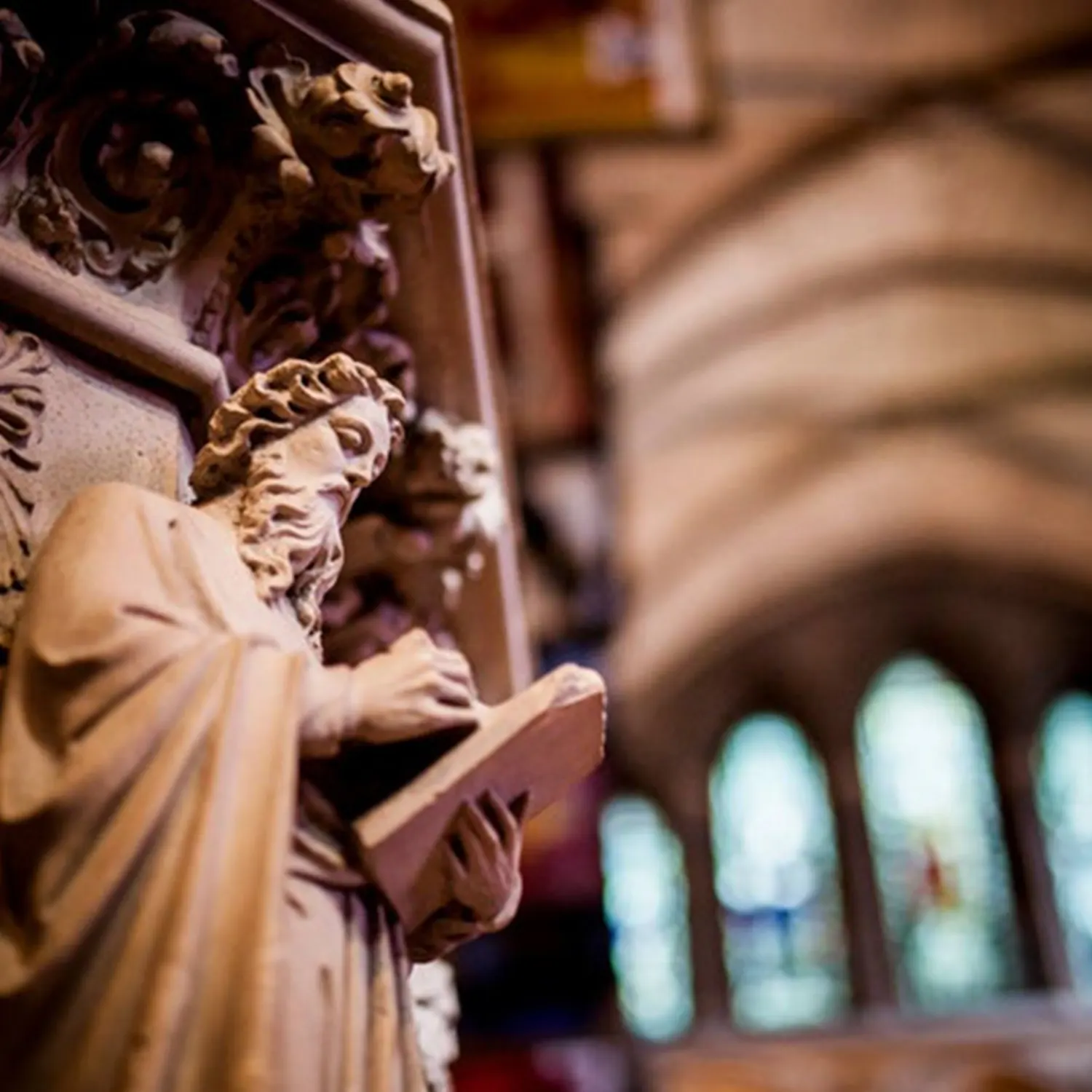
Literary enthusiasts can pay respects to Jonathan Swift, author of Gulliver’s Travels, who served as Dean of the cathedral from 1713 to 1745. His grave and epitaph are located inside, alongside a collection of his personal items and writing memorabilia.

World-Renowned Choral Tradition

St Patrick’s is home to the only remaining choir school in Ireland, maintaining a sacred musical tradition that dates back to 1432. Visitors attending daily service can experience live performances by the cathedral choir in an incredible acoustic environment.

The Birthplace of the Phrase "Chancing Your Arm"

The cathedral houses the Door of Reconciliation, an artifact linked to the 1492 feud between the Butler and FitzGerald families. By cutting a hole in the door to shake hands and declare peace, Earl Gerald FitzGerald inspired the famous idiom still used today.

A Peaceful Oasis in Dublin’s Heart

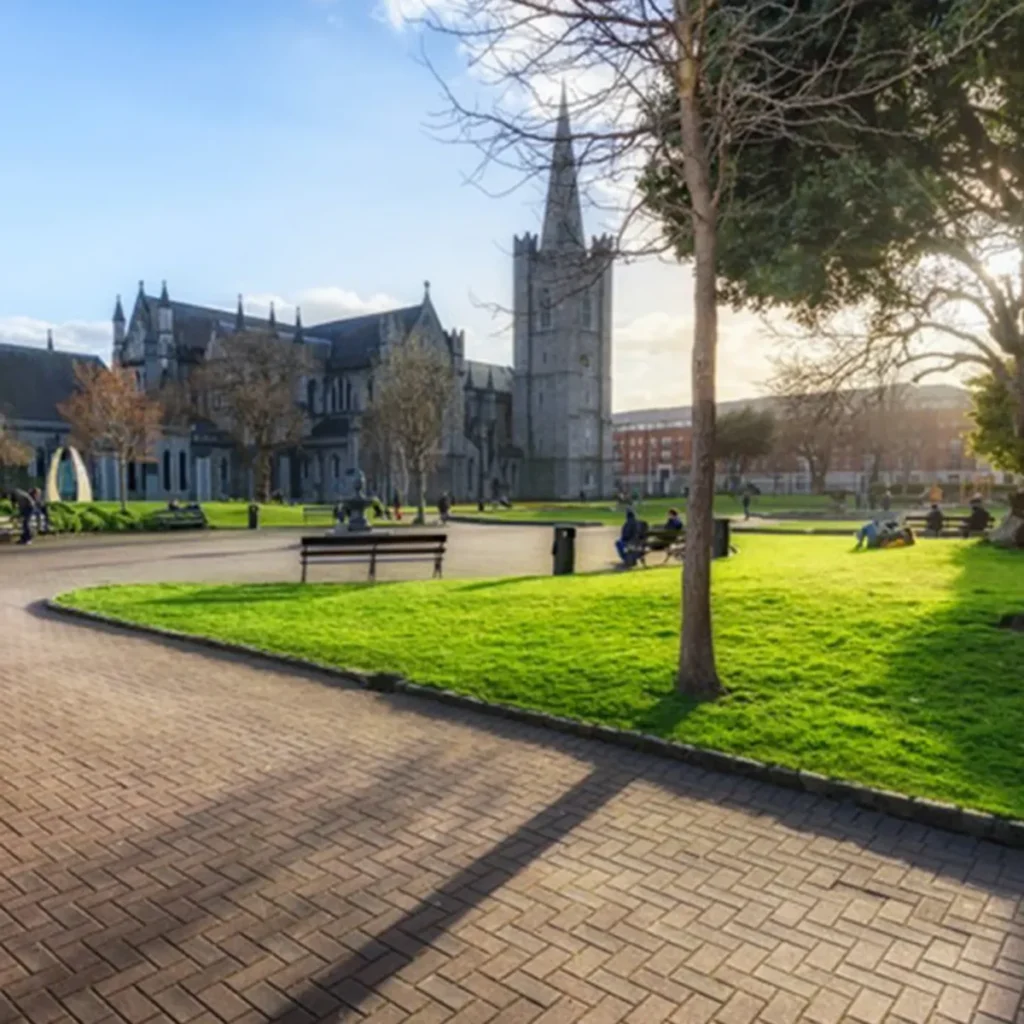
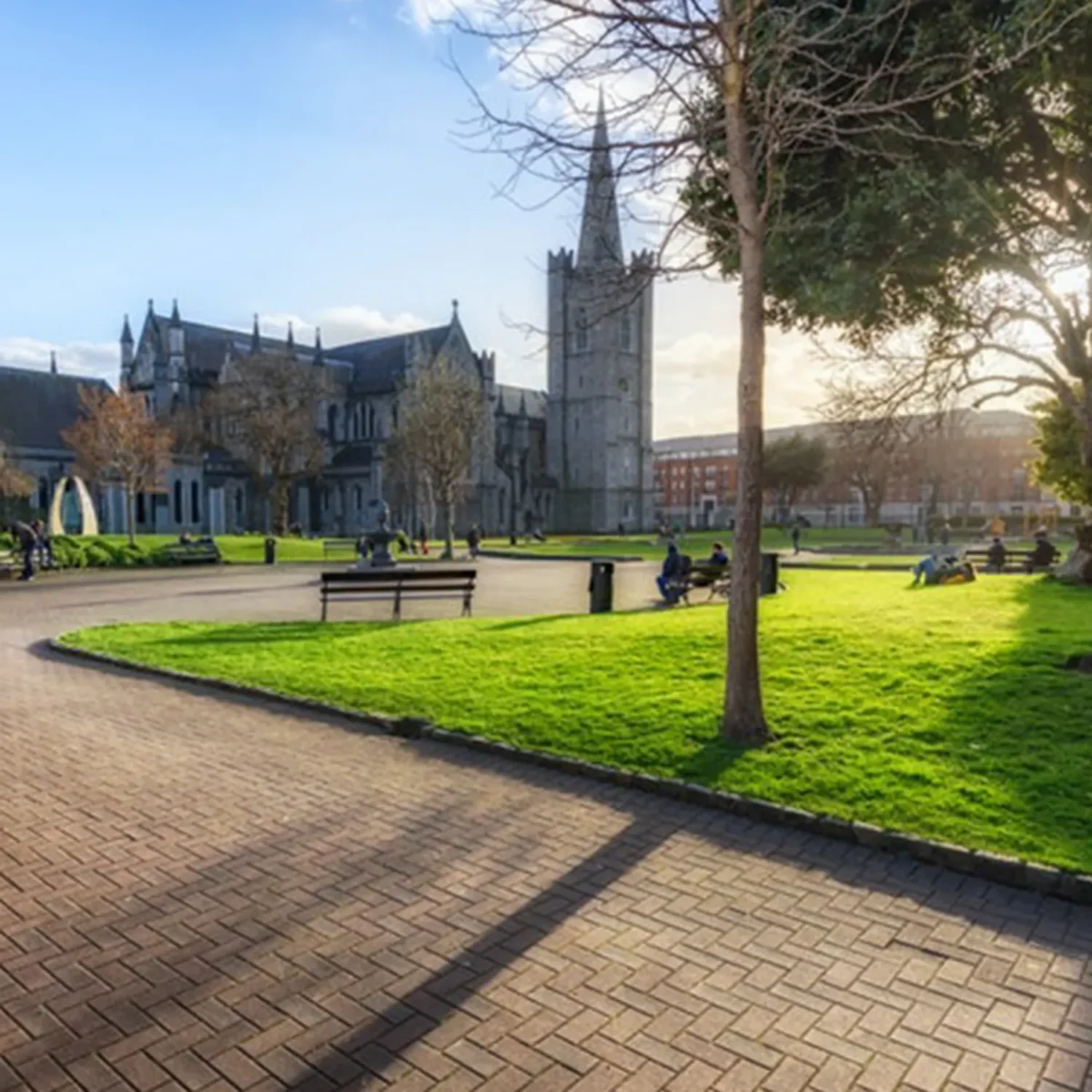
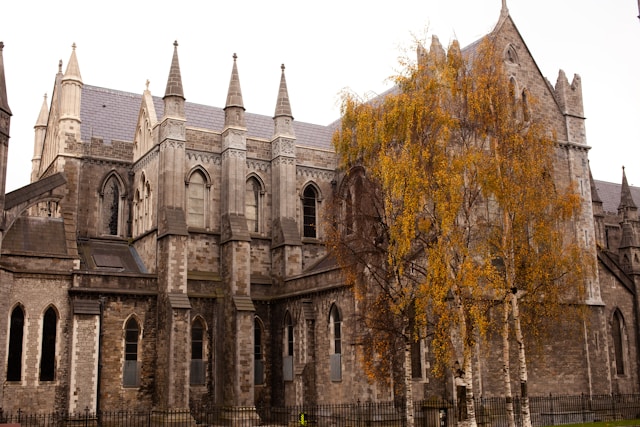
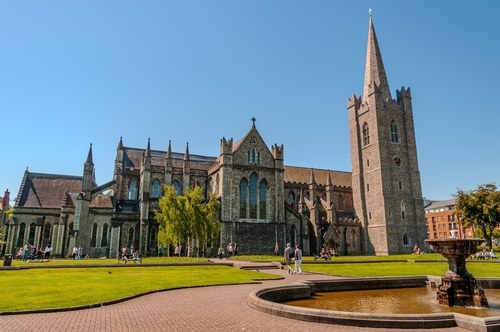
Set within beautifully maintained public grounds, St Patrick’s offers a quiet retreat from the busy city center. The adjacent park provides a picturesque spot to relax, admire the cathedral’s majestic exterior, and reflect on centuries of Dublin history.

St. Patrick's Cathedral, Dublin - Additional Info

While there is no full-service restaurant inside St Patrick’s Cathedral, light refreshments are available from temporary pop-up stations and seasonal coffee kiosks operating within the grounds.

The surrounding Liberties neighborhood is also home to a wide variety of independent cafes, traditional Irish pubs, and restaurants located just a short walk from the entrance.

Visitors are welcome to bring their own food and non-alcoholic drinks to enjoy outside in St Patrick’s Park.

Eating and drinking inside the cathedral itself is strictly prohibited to preserve the historical fabric, artwork, and furnishings of the building.

Interesting Facts about St. Patrick's Cathedral, Dublin

St Patrick’s Cathedral stands on the ancient site of a holy well where St Patrick is believed to have baptized the first Irish converts to Christianity around 450 AD.
Built between 1191 and 1270, it holds the distinction of being the largest church in Ireland and one of the largest early Gothic structures in Europe.
Jonathan Swift, the celebrated author of Gulliver’s Travels, served as the Dean of St Patrick’s Cathedral from 1713 to 1745 and is buried inside the nave.
Swift wrote his own famous Latin epitaph, which was translated by W.B. Yeats as "where fierce indignation can lacerate his heart no more."
The common English phrase "chancing your arm" originated at the cathedral in 1492 during a feud between the Earls of Kildare and Ormonde.
To declare a truce, the Earl of Kildare cut a hole through the cathedral door and thrust his arm through to shake hands with his enemy.
The famous Door of Reconciliation, containing the original carved hole from the 1492 feud, remains on display inside the cathedral today.
St Patrick’s is home to the only remaining cathedral choir school in Ireland, which was founded in 1432 and still performs daily services.
The world-famous premiere of George Frideric Handel’s masterpiece Messiah was performed in Dublin in 1742 with the assistance of the cathedral choir.
Sir Benjamin Lee Guinness, head of the famous brewing family, personally funded a massive restoration of the cathedral in the 1860s when it faced severe structural decay.
A statue of Sir Benjamin Lee Guinness sitting outside the cathedral honors his family’s substantial donations to Dublin's heritage.
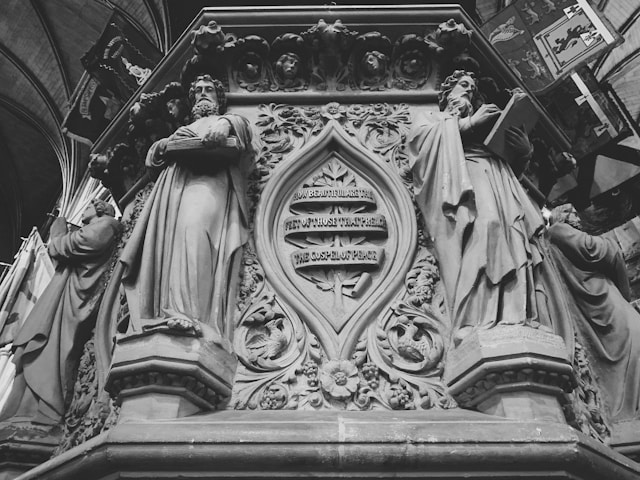
The cathedral nave contains over 500 monuments, statues, and brasses, making it one of the largest collections of historical memorials in the British Isles.
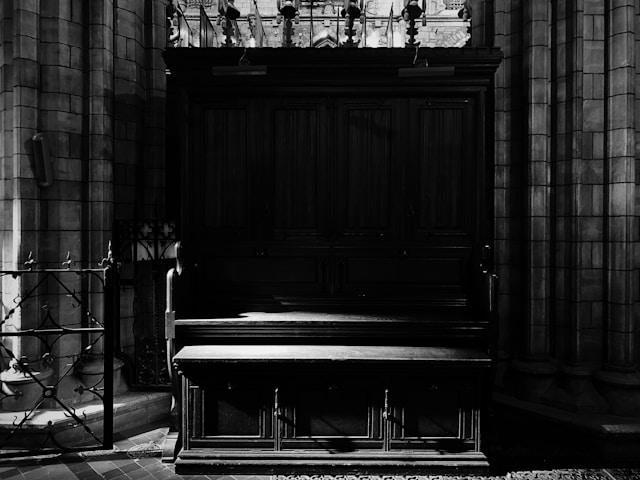
A wooden chest on display inside was carved from ancient oak trees and served as the cathedral’s strongbox for centuries.
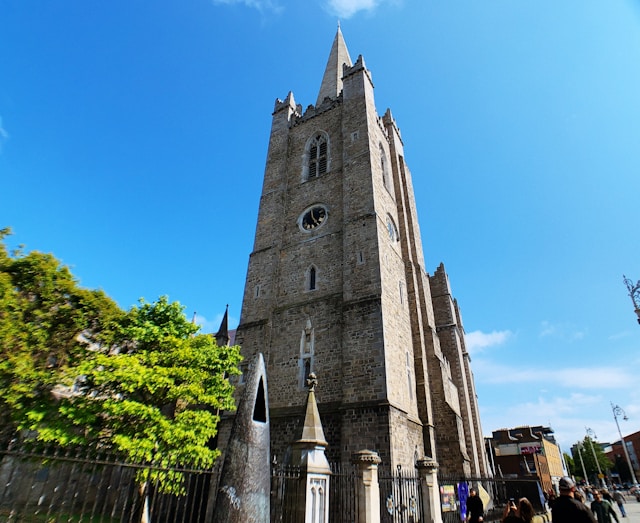
The cathedral spire, reaching 43 meters high, was added in 1749 by Archbishop Minot and remains a dominant feature of Dublin’s skyline.
Unlike most English and European cathedrals of similar size, St Patrick’s does not serve as a seat for a bishop, as Christ Church is the cathedral seat of the Dublin diocese.

FAQs about St. Patrick's Cathedral, Dublin

Quand la cathédrale Saint-Patrick a-t-elle été fondée et construite ?

Fondée en 1191 sur le site d’un ancien puits sacré datant du Ve siècle, la cathédrale fut achevée en 1270.

En quoi la cathédrale Saint-Patrick revêt-elle une importance historique ?

C’est la plus grande église d’Irlande et elle fait office de cathédrale nationale de l’Église d’Irlande.

Où est enterré Jonathan Swift ?

Jonathan Swift, auteur des « Voyages de Gulliver » et doyen de la cathédrale de 1713 à 1745, est enterré dans la nef, à côté de son épitaphe.

Quelle est l’origine de l’expression " tenter sa chance " ?

Cette expression trouve son origine à la cathédrale le {JJ}/{MM}/1492, lorsque le comte de Kildare perça une ouverture dans la « Porte de la Réconciliation » afin de serrer la main de son adversaire et de proclamer la paix.

La cathédrale Saint-Patrick dispose-t-elle d’une école de chant choral en activité ?

Oui, elle abrite la seule école de chœur cathédrale encore en activité en Irlande, fondée en 1432, qui assure des offices quotidiens.

De quel style architectural est la cathédrale Saint-Patrick ?

Le bâtiment est construit dans le style gothique anglais primitif ; il se caractérise par ses plafonds voûtés, ses monuments historiques et une flèche de 43 m ajoutée le 01/01/1749.

Qui a financé la grande restauration de la cathédrale dans les années soixante du XIXe siècle ?

Sir Benjamin Lee Guinness a financé personnellement une restauration de grande envergure de la cathédrale dans les années soixante afin de sauver l’édifice d’une grave dégradation structurelle.

Dois-je réserver à l’avance mes billets pour la cathédrale Saint-Patrick ?

Il est vivement recommandé de réserver en ligne à l’avance afin de vous assurer d’obtenir le créneau horaire de votre choix et d’éviter de faire la queue à la billetterie.

Quelles sont les heures de visite de la cathédrale Saint-Patrick ?

La cathédrale est ouverte du lundi au vendredi de 9h30 à 17h, le samedi de 9h à 17h30, et le dimanche selon des horaires fractionnés afin de permettre la tenue des offices religieux.

La cathédrale Saint-Patrick est-elle accessible aux personnes en fauteuil roulant ?

Oui, la cathédrale dispose d’une rampe permanente à l’entrée principale permettant un accès sans marches, de larges allées à l’intérieur et de toilettes entièrement accessibles.

Puis-je entrer avec mes bagages dans la cathédrale Saint-Patrick ?

Les petits sacs à main et les sacs à dos sont autorisés à l’intérieur, mais les gros bagages et les sacs volumineux sont strictement interdits et ne peuvent pas être entreposés sur place.

Est-il autorisé de prendre des photos à l’intérieur de la cathédrale ?

Les photos à titre privé sont autorisées à l’intérieur de la cathédrale, à condition de ne pas utiliser de flash, de trépied ni de matériel de tournage professionnel.

Est-il autorisé à faire de la restauration à l’intérieur de la cathédrale Saint-Patrick ?

Eating and drinking are strictly prohibited inside the building, though visitors may enjoy picnics outdoors in adjacent St Patrick’s Park.

Ce site web vend des billets officiels pour cette salle. Veuillez toutefois noter qu'il ne s'agit pas du site officiel de la salle.

Les images et les vidéos de ce site web peuvent contenir des éléments visuels créés ou améliorés à l'aide de la technologie de l'intelligence artificielle. Ils sont fournis à des fins d'illustration uniquement.